Best Places to Visit in Japan: 5 Picks and How to Choose
Tokyo, Kyoto, Osaka, Hiroshima and Sapporo compared: what each place is best for, when to go, and how to pick the right one for your first Japan trip.
The quick answer: which place fits your trip
Japan rewards a narrow itinerary. For a first trip of a week or less, the answer is Tokyo plus Kyoto — Tokyo for range, food and the easiest logistics in the country; Kyoto for the temples, gardens and old streets people picture when they imagine Japan. Add Osaka if street food and nightlife matter more to you than another temple, and stretch to Hiroshima and Miyajima if you have ten days and want the trip to carry some weight. Sapporo is the wildcard: superb seafood and mountains, far enough north that it works best as its own Hokkaido trip rather than a two-night add-on.
- Five to seven days: Tokyo and Kyoto, nothing else.
- Ten days: add Osaka as a base for Nara, or Hiroshima for the peace museum and Miyajima.
- Food first: Osaka or Sapporo.
- Second trip, or a winter trip: Sapporo and the rest of Hokkaido.
The 5 best places to visit in Japan
Best overall for a first trip
Tokyo
4.9Japan's capital is the safest first stop and the easiest place to get your bearings: English signage on the trains, airport transfers that make sense, and a subway system that will spoil every other city for you. Plan days by neighborhood instead of crossing town — Senso-ji and the old Asakusa lanes in the morning, Shibuya or Shinjuku after dark, the outer Tsukiji market for breakfast, Meiji Jingu and the Harajuku backstreets in one half-day. It is also the best launchpad for day trips: Nikko's shrines, Kamakura's temples and coast, or Hakone for an onsen and a shot at Mount Fuji. Four or five nights is the sweet spot; three feels rushed.
What Tokyo does best
- Something for every interest: temples, museums, food halls, galleries, nightlife
- The easiest arrival and the clearest transit system in the country
- Day trips by train to Nikko, Kamakura and Hakone
- Food at every price point, from standing noodle bars to multi-course kaiseki
Where Tokyo falls short
- Enormous and tiring — pick two neighborhoods a day, not five
- Headline sights are jammed at weekends and during cherry-blossom season
- Rooms are small; book early for the space you want
Best for temples, gardens and tradition
Kyoto
4.8Kyoto is where the postcard Japan lives, and it rewards a slower pace than most first-timers allow. Fushimi Inari's tunnel of gates is best walked early, before the tour groups arrive. Kinkaku-ji's gold pavilion, the Arashiyama bamboo grove and river, the Higashiyama hillside lanes around Kiyomizu-dera and Gion's wooden townhouse streets fill three full days without padding. Nishiki Market covers lunch and knife shopping. Sights cluster from Arashiyama in the west to the eastern hills, so plan one area per half-day rather than crisscrossing the city on packed buses.
What Kyoto does best
- The densest concentration of temples, gardens and preserved districts in Japan
- A walkable historic core, backed by subway and bus lines
- Quick hops to Nara and Osaka for day trips
- Unmatched in cherry-blossom and fall-foliage seasons
Where Kyoto falls short
- Buses and the famous photo spots are jammed by mid-morning
- Sights are spread out — you cannot see the east and Arashiyama in one morning
- Many restaurants close early, and some popular ones need reservations
Best for food and nightlife
Osaka
4.5Osaka is the pressure valve of a Japanese itinerary: louder, friendlier and built around eating. Dotonbori's canal-side neon, takoyaki straight off the griddle, okonomiyaki, kushikatsu in Shinsekai and the graze-as-you-go stalls of Kuromon Ichiba market are the main event, not a side note. Osaka Castle and the Umeda Sky Building's rooftop ring cover the sightseeing. It is also the most practical base in the Kansai region — short train rides reach Kyoto, Nara and Kobe, and Kansai airport is a straightforward transfer. Two nights is enough for the city itself; three if you use it as a hub.
What Osaka does best
- Street food that justifies the trip on its own
- Livelier, later nightlife than Kyoto or Tokyo's quieter districts
- A central base for Nara, Kobe and Kyoto
- Generally more affordable hotels than Kyoto
Where Osaka falls short
- Fewer bucket-list sights than Tokyo or Kyoto
- The center is loud and commercial — not the older Japan people come for
- Can feel like a repeat of Tokyo if you have already had a big-city fix
Best for history and big scenery
Hiroshima and Miyajima
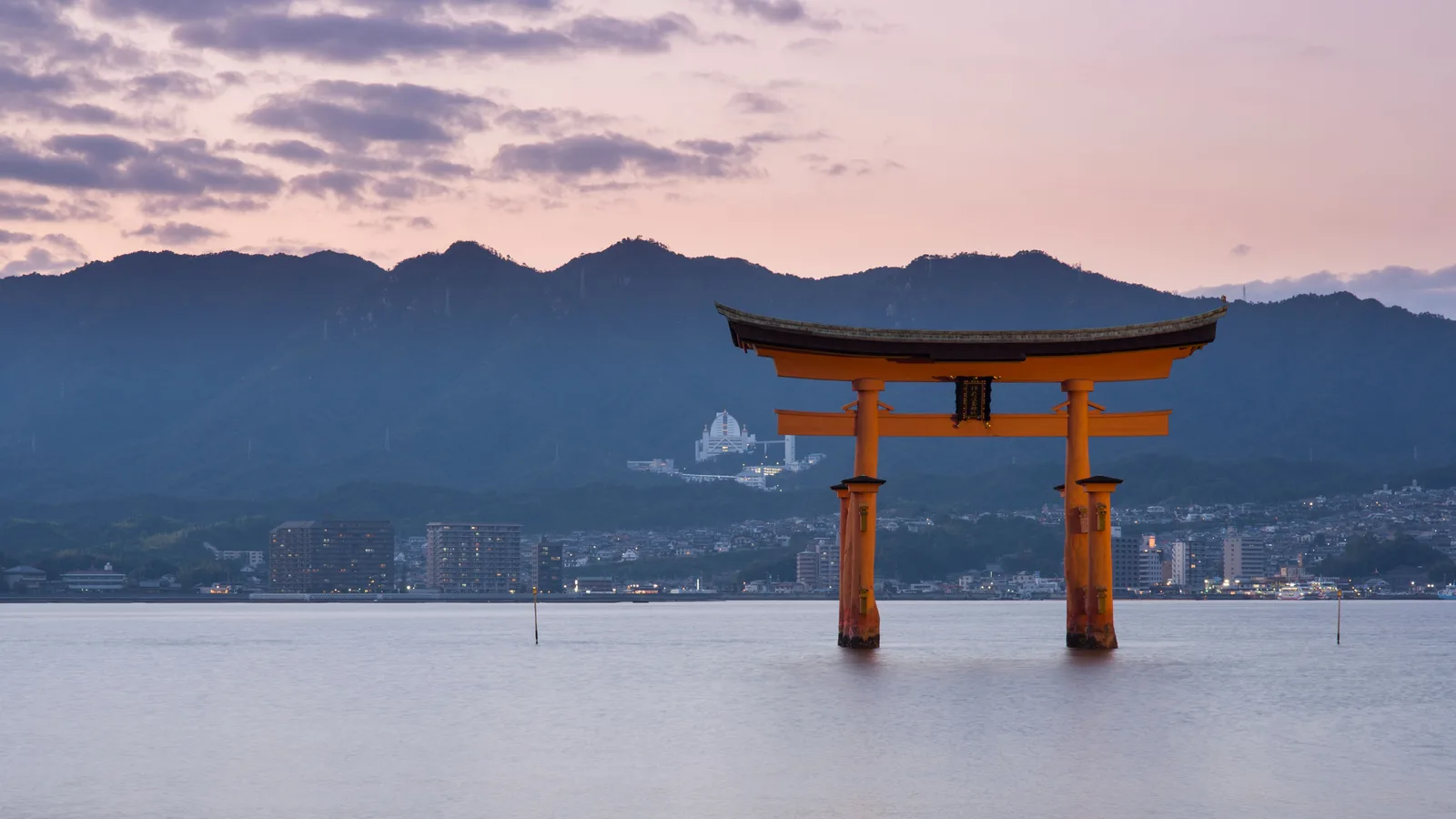
4.6Hiroshima pairs a sobering morning with one of the best half-days in Japan. The Peace Memorial Park, the museum and the Atomic Bomb Dome sit within a few minutes of each other and deserve unhurried time. Then a tram and short ferry ride take you to Miyajima, where Itsukushima Shrine's torii stands in the tidal flats; at high tide it appears to float. Ride the ropeway up Mount Misen for a view across the Inland Sea, and eat oysters and Hiroshima-style okonomiyaki with noodles. Hiroshima sits on the Sanyo shinkansen, so it slots naturally between Osaka and points west, with Himeji Castle on the way.
What Hiroshima does best
- A museum and memorial that stay with you long after the trip
- Miyajima is worth a full day, not an afternoon
- Calmer and less crowded than the big three cities
- Excellent local food and a straightforward shinkansen stop
Where Hiroshima falls short
- A deliberate detour west — it will not fit a five-day trip
- The museum is heavy; do not schedule it before a long travel day
- Miyajima is packed from late morning, so stay overnight or go first thing
Best for seafood, ramen and northern nature
Sapporo
4.4Hokkaido's capital trades temple trails for wide streets, miso ramen and some of the best seafood in the country — crab, salmon roe and uni at Nijo Market and in the basement food halls of the big department stores. Odori Park splits the city grid, the Sapporo Beer Museum explains the local obsession, and the ramen alley off Susukino is a short evening in itself. February's Snow Festival turns Odori into a row of giant snow sculptures; July and August are dry and mild while the rest of Japan is sticky. Day trips reach Otaru's canal, the lavender fields of Furano and Biei in early-to-mid July, and ski hills such as Teine.
What Sapporo does best
- Cool, dry summers when Honshu is hot and humid
- Seafood and ramen worth planning a trip around
- The Snow Festival and easy access to Hokkaido ski areas
- Day trips to Otaru, Furano and Biei without a car
Where Sapporo falls short
- A flight away from the Tokyo–Kyoto–Osaka corridor
- Works best as its own trip rather than a two-night add-on
- Long, snowy winters if you are not there for the snow
How the five compare side by side
| What to compare | Tokyo | Kyoto | Osaka |
|---|---|---|---|
| Best for | Range, food and an easy first landing | Temples, gardens and old districts | Street food and nightlife |
| Suggested nights | 4–5 | 3 | 2 |
| Getting around | Subway and JR trains with an IC card | Subway, buses and walking | Subway; the center is walkable |
| Sweet-spot season | Late March–May and October–November | Same, plus November foliage | Any season; spring and fall are mildest |
| Main frustration | Distance between sights | Bus queues and crowded photo spots | Fewer headline sights |
| What to compare | Hiroshima and Miyajima | Sapporo |
|---|---|---|
| Best for | Peace museum, island shrine, calm pace | Seafood, ramen, snow and mountains |
| Suggested nights | 2 — one in the city, one on Miyajima | 3 in the city, more with day trips |
| Getting there | Shinkansen on the Sanyo line, between Osaka and points west | Flight from Tokyo or Osaka |
| Sweet-spot season | Spring and fall | February for snow; July–August for dry, mild weather |
| Main frustration | The museum's emotional weight; midday Miyajima crowds | Distance from the rest of the route |
Two rules fall out of these tables. First, Tokyo and Kyoto are not interchangeable — Tokyo gives you variety and logistics, Kyoto gives you atmosphere and old Japan, and a first trip that skips one usually regrets it. Second, the marginal cities should earn their slot: Osaka earns it through food, Hiroshima through the museum and Miyajima. If neither of those appeals, spend the nights in Kyoto instead.
The criteria that should decide it
- Season and weather
- 5.0/5
Summer heat and humidity, the June–July rainy season and the August–September typhoon window change which cities are comfortable and which are a slog.
- Days on the ground
- 5.0/5
Under a week, keep it to two cities. Ten days opens up Osaka and Hiroshima without rushing.
- Crowd tolerance
- 4.0/5
Tokyo and Kyoto's headline sights are busiest at weekends and during cherry-blossom and fall-foliage weeks.
- Food and nightlife weight
- 3.5/5
If eating well is the point of the trip, Osaka and Sapporo earn a place that scenery alone might not.
- Long-distance trains and flights
- 3.0/5
Every added region costs a transfer and half a day. Hokkaido is almost always its own trip.
Answer those five honestly, in that order, and the shortlist usually collapses on its own. A couple traveling in late July with eight days should not be choosing between Kyoto and Sapporo on merit — the weather is doing the choosing. A pair with ten days in November should be building around Kyoto and Hiroshima, not adding a northern detour.
How to sequence the places you pick
- Seven days: four nights in Tokyo with one day trip, three nights in Kyoto, and a fast train between them.
- Ten days: three nights Tokyo, three Kyoto, two Osaka, two Hiroshima and Miyajima — or drop Osaka to one night and give Kyoto a fourth.
- Fourteen days: the ten-day route plus Kanazawa or Hakone, or a short flight up to Sapporo if you want a second climate.
Keep the long moves to one per trip. Tokyo to Kyoto is a single comfortable train ride; adding Hiroshima after that is another; Osaka to Hiroshima and back to Tokyo in three days is where itineraries start to feel like logistics exercises.
Timing: when each place is at its best
Cherry blossom in Tokyo and Kyoto usually peaks from late March into early April, and Kyoto's fall foliage runs roughly mid-to-late November. Both are the busiest and priciest weeks of the year, so book months ahead. The rainy season runs from mid-June into mid-July across most of Honshu, and typhoons are most likely from August into September.
July and August are hot and humid in Tokyo, Kyoto and Osaka — which is exactly when Sapporo is at its best, dry and mild with flowers in the fields. Sapporo's Snow Festival takes over Odori Park for about a week in early February, and Hokkaido's ski hills are at their peak around the same time. Hiroshima and Miyajima are most comfortable in spring and fall, and Miyajima's tides decide whether the torii appears to float or stands on mud, so check a tide table the night before.
Mistakes that flatten a first Japan trip
- Cramming four regions into a week. You will remember station platforms, not temples.
- Booking hotels late for spring and fall. The good rooms in Kyoto go first.
- Assuming cards work everywhere. Carry cash for small restaurants, shrines and market stalls.
- Underestimating walking. Station exits are far apart and a "short walk" on a map is often twenty minutes.
- Skipping the Hiroshima museum because it sounds grim. It is the reason most travelers say that stop mattered most.
The verdict
Common questions about visiting Japan
How many days should a first trip to Japan be?
Seven to ten days is the usual sweet spot: four nights in Tokyo and three in Kyoto, with Osaka or Hiroshima added if you reach ten. Under five days is better spent in one city.
Do I need a Japan Rail Pass?
Not automatically. The nationwide pass comes in 7-, 14- and 21-day versions and only pays off on long, frequent shinkansen legs. Price out your actual route against point-to-point tickets before buying.
Is Japan easy to visit without speaking Japanese?
Yes. Airports, major stations and chain hotels have English signage, and translation apps handle menus and directions. In smaller towns, a few phrases and a screenshot of your destination go a long way.
When is typhoon season in Japan?
The Pacific typhoon season runs roughly May through October, with the highest risk in August and September. Most systems weaken before landfall, but keep a flexible day in late-summer plans.
Is Hiroshima worth it on a short trip?
Only if you can give it two nights: one for the Peace Memorial Park and museum, one for Miyajima. Squeezed into a single day trip, you end up rushing both.
Can you see Mount Fuji from Tokyo?
Rarely and not reliably. Hakone, the Fuji Five Lakes area and the shinkansen between Tokyo and Kyoto give much better odds, mostly on clear, cold days.
Related articles
 The Best Carry-On Luggage: 5 Picks for Every TripShortlists
 Best City to Travel in Canada: 5 Picks for Every TravelerShortlists
 Best Crossbody Bags for Travel: 5 Picks Worth PackingShortlists
 The 5 Best December Travel DestinationsShortlists
 The 5 Best Places to Go in JanuaryShortlists
 Best Destinations to Visit in March: 5 Trips Worth PlanningShortlists
 Best Hiking Boots: 5 Picks for Trails, Backpacking and Wide FeetShortlists
 Best Island to Travel to in Hawaii: 5 Picks ComparedShortlists