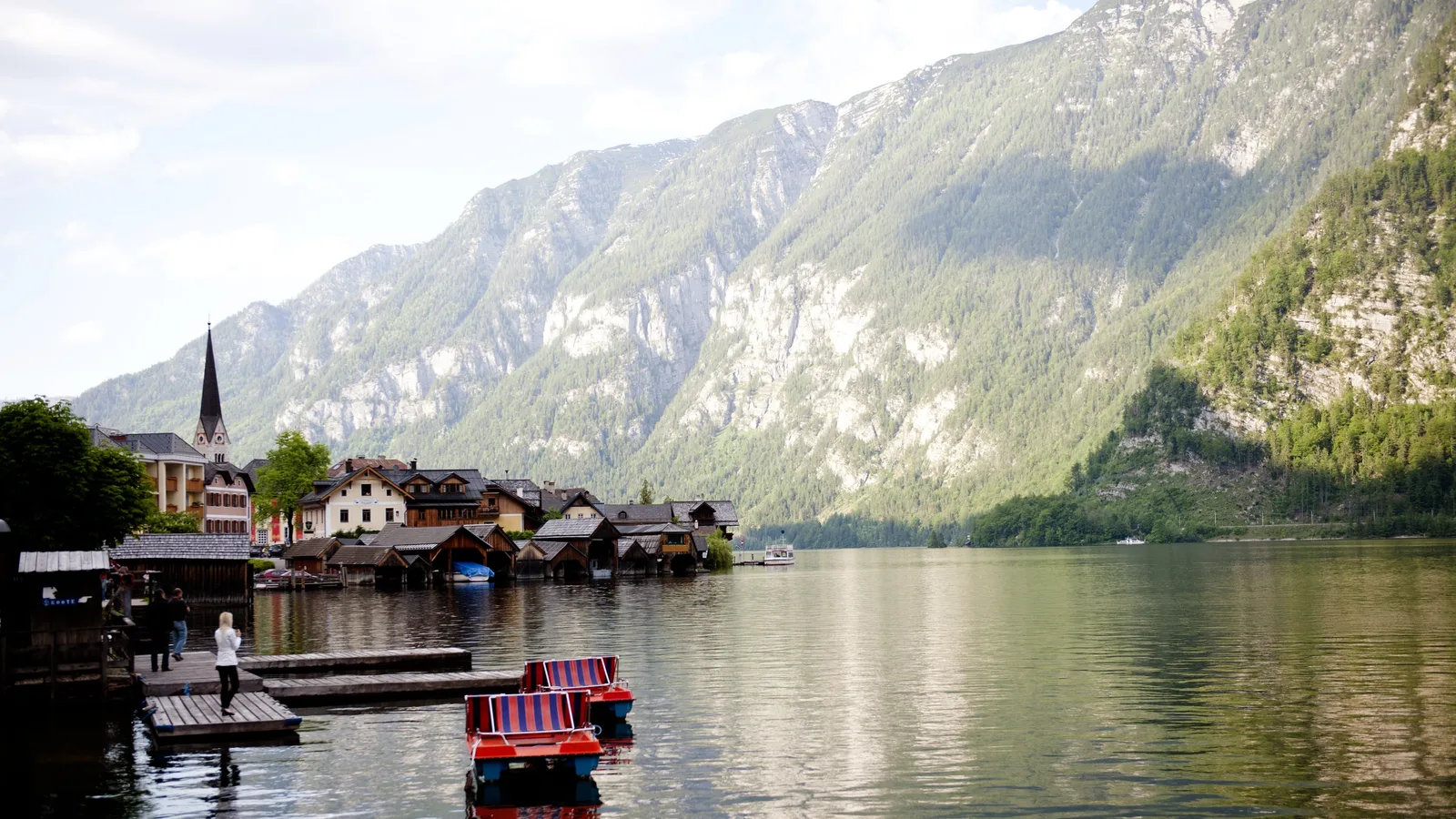
The Best Places to Travel in Switzerland: 5 Picks Worth Your Trip
From Lucerne and Zermatt to the Jungfrau region, Bern and Lugano: the five best places to travel in Switzerland, and how to pick your base.
The Quick Answer
Switzerland is small enough to cross by train in a day, which is exactly why the "best" place depends on the trip you are actually taking. Five destinations answer five different questions:
- Lucerne — the safest first choice. Lake, medieval old town and three mountain railways within an hour, on a direct line from Zurich.
- Zermatt — go if the Matterhorn is the reason for the trip. Car-free village, glacier views, year-round skiing.
- Interlaken and the Jungfrau region — the best base for hiking, waterfalls and mountain railways, with car-free villages up the valleys.
- Bern — the capital, and the most underrated city break in the country: arcades, river swimming, an hour from the Alps.
- Lugano — Switzerland with an Italian accent: palm-lined lakefront, funiculars, warm weather and a border you can cross for lunch.
The 5 Best Places in Switzerland, Reviewed
Best overall for a first trip to Switzerland
Lucerne (Luzern)
Lucerne compresses the Swiss postcard into a walkable old town: the Chapel Bridge with its Water Tower, the surviving Musegg city wall, the Lion Monument, and a lakefront that opens straight onto the Alps. What makes it the best all-round base is the mountain access. A lake boat reaches Vitznau at the foot of the Rigi cogwheel railway, the world's steepest cogwheel line climbs Mount Pilatus from Alpnachstad, and the rotating cable car to the Titlis glacier leaves from Engelberg, roughly an hour away.
Two full days covers the town itself; four or five days lets you add two or three summits without changing hotels. Stay in or near the old town if you want atmosphere, or by the station if you want to move fast.
Strengths
- Old town, lake boats and mountain railways within an hour of each other
- Direct trains from Zurich and from Zurich Airport
- Lake Lucerne boats are part of the public transport network, not a separate tour
- Works year-round — a Christmas market in winter, lakeside terraces in summer
Trade-offs
- Heavy tour-group traffic around the Chapel Bridge and Lion Monument in July and August
- Old-town hotels are expensive and rooms are often small
- Summit excursions are weather-dependent, so keep one flexible day
Best for alpine drama and the Matterhorn
Zermatt
Zermatt is the answer when you want the Matterhorn itself, not a photograph of it. The village is car-free — you park in Täsch and take the shuttle train up — and the classic excursions are all here: the Gornergrat cogwheel railway, running since 1898, up to a ridge just over 3,000 m with the Monte Rosa massif in front of you, and the cable car to Matterhorn Glacier Paradise at 3,883 m, the highest cable-car station in Europe.
Hiking starts at the village floor, so non-climbers get big views without big effort, and the glacier ski area keeps lifts running outside the winter season. It is a three-and-a-half-hour train ride from Zurich via Visp, which is the price you pay for the scenery.
Strengths
- Matterhorn views from the main street, the hotel window and the trails
- No cars — quiet, and easy to walk everywhere
- Glacier skiing possible outside the winter months
- Huge trail network, from valley walks to high routes
Trade-offs
- One of the most expensive places to sleep and eat in Switzerland
- Long transfer from Zurich, Geneva or Milan
- The main street turns into a shopping corridor in peak season
Best for hiking, waterfalls and mountain adventure
Interlaken and the Jungfrau Region
Interlaken sits on the hinge between Lake Thun and Lake Brienz, and everything in the Bernese Oberland radiates from it. The Jungfrau Railway climbs to Jungfraujoch at 3,454 m, the highest railway station in Europe. The Lauterbrunnen valley has Staubbach Falls dropping roughly 300 m off the cliff. The First gondola from Grindelwald feeds straight into ridge walks, and car-free Wengen and Mürren make good quiet bases above the valley floor.
This is the region for people who want to be outdoors every day rather than look at scenery from a terrace: hiking, paragliding, via ferrata, multi-day trails, and enough hostels and apartments to keep families and groups within budget.
Strengths
- Densest concentration of mountain railways and cable cars in the country
- Car-free villages (Wengen, Mürren) reached by train
- Good range of apartments, hostels and family rooms
- About two hours from Zurich by train
Trade-offs
- Interlaken town itself is a busy hub of souvenir shops and bus groups
- The Jungfraujoch ticket is one of the priciest excursions in Switzerland
- Cloud can close the high routes for days at a time
Best city break with real local life
Bern
Bern is the capital and the country's most underrated city stop. The medieval old town is a UNESCO World Heritage site, threaded with one of Europe's longest covered shopping arcades, and the Zytglogge clock tower still puts on its moving-figure show on the hour. Below it, locals swim in the Aare in summer and watch from the Rose Garden above the river bend; the Bear Park, the Einstein house and the Kunstmuseum fill a rainy afternoon.
Bern matters in a Switzerland itinerary because it is a real working city rather than a resort — cheaper than Lucerne or Zermatt, central on the rail map, about an hour from Interlaken and an hour from Zurich. Use it as a two-night pause between mountain legs.
Strengths
- Authentic city life, markets and cafés rather than souvenir streets
- Usually cheaper than the headline resorts
- Central rail hub for day trips to Interlaken, Basel, Zurich and the Emmental
- River swimming and riverside bars in summer
Trade-offs
- No big alpine panorama from the centre
- The main sights fit into a single day
- Quiet in the evenings and very quiet on Sundays
Best for warm weather and Italian flavor
Lugano and Lake Lugano
Lugano is Switzerland with an Italian accent. The lakefront is lined with palms, a funicular climbs Monte San Salvatore and another Monte Brè, and the olive trail above Gandria winds between stone villages and lake viewpoints. Ticino has the mildest climate in the country, so swimming in the lake lido is realistic from late spring into early autumn — something you cannot say about most Swiss lakes.
The city is under three hours from Zurich on the Gotthard route and about forty minutes from Como in Italy, which makes it the natural southern bookend to a trip: mountains in the north, lake and food in the south.
Strengths
- Warmest, sunniest corner of Switzerland
- Lake swimming, palm-lined promenades and strong Italian food
- Easy day trip across the border to Como
- Funiculars and lake boats give plenty to do without a car
Trade-offs
- Humid in high summer
- Not the dramatic high-alps scenery people picture when they think of Switzerland
- Feels more like a small Italian city than a mountain resort
How the Five Picks Compare
| Factor | Lucerne | Zermatt | Interlaken & Jungfrau |
|---|---|---|---|
| Signature sight | Chapel Bridge and Lake Lucerne | The Matterhorn above the village | Jungfraujoch and the Lauterbrunnen valley |
| Best suited to | First-timers, couples, short trips | Bucket-list scenery, photographers, skiers | Hikers, families, active travelers |
| Typical stay | 2–4 nights | 3–4 nights | 3–5 nights |
| Driving | Easy; park at the hotel or station | Park in Täsch, then shuttle train — village is car-free | Easy to the valleys; Wengen and Mürren are car-free |
| Train from Zurich | About 1 hour | About 3.5 hours via Visp | About 2 hours via Bern |
| Busiest period | July–August | Christmas–New Year and July–August | July–August |
| Factor | Bern | Lugano |
|---|---|---|
| Language | German | Italian |
| Setting | A river loop around a medieval old town | A lake with mountains rising straight out of it |
| Signature experience | Arcades, the Zytglogge clock, an Aare swim | Funicular to Monte San Salvatore, lake lido |
| Best season | May–September for the river; year-round for museums | April–June and September–October |
| Day trips | Interlaken, Emmental, Basel, Zurich | Como, Bellinzona's castles, Locarno |
| Watch out for | Closed shops on Sundays; limited mountain views | Summer heat and lakeside traffic |
How to Choose Where to Base Yourself
Work through these in order and the shortlist narrows quickly:
- Time on the ground. Four or five days buys you one base plus day trips. Seven to ten days buys two bases — Lucerne and Interlaken, or Bern and Zermatt. Two weeks lets you add Ticino or Graubünden.
- What you want to do before breakfast. If the answer is "be on a trail", choose the Jungfrau region. If it is "read a newspaper by a lake", Lucerne or Lugano.
- Season. Winter pushes you to Zermatt or another ski resort; July and August favour high altitude and early starts; spring and autumn favour cities and lakes.
- Train or car. Almost everywhere is reachable by rail, and the car-free villages — Zermatt, Wengen, Mürren — make a rental car a liability. If you drive, expect to park at the valley station.
- Budget. Mountain railways, not hotels, are usually the biggest single line item. A Swiss Travel Pass or Half-Fare Card changes the maths considerably.
- Language. German in Lucerne, Interlaken, Bern and Zermatt, Italian in Lugano, French further west. English is widely spoken in tourist areas.
When to Go, Season by Season
| Factor | Spring | Summer | Autumn | Winter |
|---|---|---|---|---|
| Valley weather | Mild and changeable | Warm with long daylight | Cool nights, clear light | Cold; grey in the lowlands |
| Crowds | Light apart from Easter | Peak, especially July–August | Moderate, thinning after mid-October | Heavy at Christmas and New Year, plus ski weekends |
| High mountain railways | Some still on winter schedules or closed | Nearly everything running | Open into October, then seasonal shutdowns | Ski lifts running; some panoramic lines closed |
| Best for | Cities, lakes, low-altitude walking | Hiking, climbing, lake swimming | Larch color, photography, wine harvest | Skiing, snowshoeing, Christmas markets |
| Watch out for | Fog sitting in the lowlands | Afternoon thunderstorms in the mountains | Early snow closing high passes | Short daylight in the valleys |
For a mixed trip that includes both cities and mountains, late May to June and September to early October are the sweet spots: trails are largely open, the light is good, and hotel rates and crowds ease off either side of the summer peak. Mid-July to mid-August is the most reliable window for high-altitude hiking and lake swimming, and the busiest for everything else.
Getting Around Without a Car
The Swiss rail network reaches villages that look unreachable on a map, and Zurich Airport has its own station under the terminal. Main lines run at least hourly, often half-hourly, and postbuses cover the gaps at the end of the valleys. Lake boats on Lucerne, Thun, Brienz and Lugano are part of the same system rather than separate sightseeing products.
A Swiss Travel Pass covers trains, buses and boats for a set number of days and gives free entry to many museums plus reduced fares on most mountain railways; a Half-Fare Card simply halves ticket prices for a year and often pays for itself on a longer trip. Point-to-point saver tickets bought for a specific departure are the cheapest option if your plans are fixed.
Switzerland at a Glance
- Currency
- Swiss franc (CHF); cards are widely accepted, but some kiosks and mountain huts are cash-only
- Languages
- German, French, Italian and Romansh, depending on the region
- Rail network
- National SBB/CFF/FFS services plus private mountain railways and cable cars
- Power
- Type J sockets, 230 V — bring an adapter
- Tap water
- Drinkable everywhere, including most public fountains
- Tipping
- Service is included; rounding up the bill is the norm
- Emergency numbers
- 112 for any emergency; 117 police, 144 ambulance, 118 fire
- Sunday opening
- Most shops close on Sundays, except at stations, airports and some tourist areas
The Verdict
Switzerland Travel: Common Questions
How many days do I need in Switzerland?
Four days is enough for one base and a couple of mountain excursions. Seven to ten days is the comfortable range for two bases plus day trips, and two weeks lets you add a southern or eastern region without rushing.
Should I stay in Lucerne or Zurich?
Lucerne if the mountains and the lake are the point of the trip — it is smaller, prettier and closer to the summits. Zurich if you want big-city museums, nightlife and a short hop from the airport.
Do I need to reserve seats on Swiss mountain railways?
Usually not. Most cogwheel trains and cable cars work on a turn-up-and-ride basis, though a few summit trains accept optional seat reservations in peak season. Check the webcam before buying.
Where should I go in winter if I don't ski?
Zermatt, Lucerne and Bern all work without skis: cleared winter walking trails, cogwheel railways that run year-round, and Christmas markets in December. Mountain weather, not snow cover, is the limiting factor.
Can Switzerland be done on a budget?
Yes, with trade-offs. Self-catering apartments, supermarket lunches, regional trains and a Half-Fare Card bring costs down; summit excursions are where the money goes, so pick one or two rather than all of them.
What should I pack for a Swiss trip?
Layers, a waterproof shell, broken-in walking shoes and sunglasses. Valley and summit temperatures can differ sharply on the same day, and afternoon showers are common in summer.
Related articles
 The Best Carry-On Luggage: 5 Picks for Every TripShortlists
 Best City to Travel in Canada: 5 Picks for Every TravelerShortlists
 Best Crossbody Bags for Travel: 5 Picks Worth PackingShortlists
 The 5 Best December Travel DestinationsShortlists
 The 5 Best Places to Go in JanuaryShortlists
 Best Destinations to Visit in March: 5 Trips Worth PlanningShortlists
 Best Hiking Boots: 5 Picks for Trails, Backpacking and Wide FeetShortlists
 Best Island to Travel to in Hawaii: 5 Picks ComparedShortlists