Best Sites to Visit in Italy: 5 Picks Worth Building a Trip Around
Five Italian sites worth planning a trip around — the Colosseum, the Vatican Museums, Pompeii, Cinque Terre and Venice — with tips on booking and timing.
The quick answer: which Italian site suits which trip
Italy has more than its share of famous sights, and the five below are the ones that repay planning rather than luck. They are not interchangeable: one is a buried city, one is an art collection, one is a stretch of coastline, and two are set pieces you can walk in an afternoon.
- Best for a first trip to Italy: the Colosseum and Roman Forum in Rome — three headline monuments on a single ticket, right in the middle of the city.
- Best for art: the Vatican Museums and the Sistine Chapel.
- Best for ruins and a volcano: Pompeii, with Mount Vesuvius above it.
- Best for scenery without a car: the Cinque Terre.
- Best for a compact, cinematic day: St Mark's Basilica and the Doge's Palace in Venice.
The 5 best sites to visit in Italy
Ranked for what they give a first or second trip, not for how many photos they generate. Each entry says what the site is genuinely best at, plus the parts that will test your patience.
Best overall for a first Italy trip
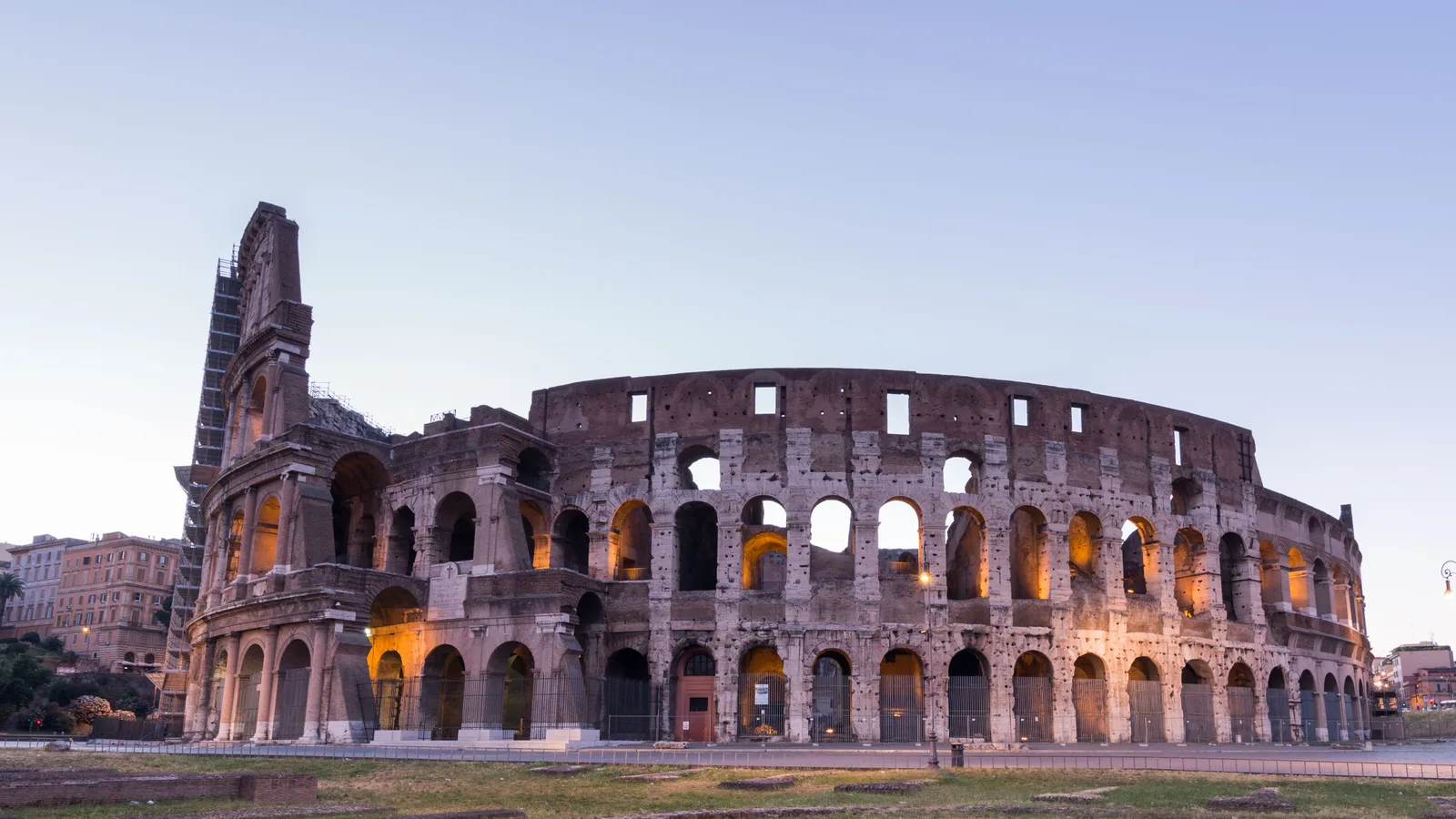
Colosseum and Roman Forum, Rome
4.9The single most efficient half-day in Italy. One combined ticket covers the Colosseum, the Roman Forum and Palatine Hill, so you walk from imperial amphitheatre to the streets of the ancient city without changing neighbourhoods. Book a timed Colosseum slot, take the Forum early or late in the day, and you have seen the thing most people come to Rome for.
What it does best
- Three major monuments on one ticket, all walkable from the historic centre
- Timed entry makes crowd planning genuinely possible
- Layers of history on top of each other — republican, imperial and medieval
What to expect
- Almost no shade in the Forum; summer visits are punishing at midday
- Security queues at the Colosseum can swallow 30 minutes even with a booking
Best for art on a monumental scale
Vatican Museums and Sistine Chapel
4.8One long route through papal collections, the Raphael Rooms, the map gallery and finally the Sistine Chapel. It is the densest concentration of world-class art you can see in a morning anywhere in Europe, and St Peter's Basilica is a two-minute walk from the exit. Go early, go slowly, and accept that you will not see everything.
What it does best
- Raphael, Michelangelo and the classical collections in a single continuous visit
- Early-morning and evening openings are quieter than the middle of the day
- St Peter's Basilica and the dome are next door for a second stop
What to expect
- Corridors are packed even with a timed ticket; the chapel is silent but crowded
- The route is long — three to four hours is a minimum, not a maximum
Best ancient-site day trip
Pompeii and Mount Vesuvius
4.7A whole Roman city rather than a single monument: streets, bakeries, bathhouses, frescoed villas and an amphitheatre, spread over a site big enough to lose an afternoon in. Above it, the crater of Vesuvius explains why any of it is there. Base yourself in Naples or Sorrento and give it a full day rather than a rushed morning.
What it does best
- Scale you cannot get in Rome — an entire street plan survives
- Reachable by train from Naples and Sorrento without a car
- Pairing the ruins with the Vesuvius crater gives two very different experiences in one day
What to expect
- Very exposed, with long walks between highlights and little shade
- The local rail line is slow and crowded in high season
- Vesuvius access closes in bad weather, so keep the order of the day flexible
Best coastal scenery by train
Cinque Terre
4.7Five villages pinned to the cliffs between Levanto and La Spezia, linked by a railway that takes minutes between stops and by coastal trails that take hours. It is the easiest place in Italy to combine hiking with swimming and seafood, and it works without a car. Stay two nights in Monterosso or Vernazza and visit the rest early or late.
What it does best
- Villages linked by short train hops, so you can see all five in a day or two
- Coastal trail sections with sea views that justify the walk
- Works as a base rather than a whistle-stop — evenings are far calmer than midday
What to expect
- Extremely busy between late morning and late afternoon in summer
- Trail sections close after heavy rain, sometimes for days
Best compact set piece in one square
St Mark's Basilica and Doge's Palace, Venice
4.6Two of Europe's great interiors face each other across Piazza San Marco. The basilica gives you gold-ground mosaics and a sense of a city built on trade with the East; the Doge's Palace gives you the seat of a maritime republic, the Council chambers and the Bridge of Sighs on the way to the prisons. Half a day covers both if you book each separately.
What it does best
- Two major sights on one square, with no transport in between
- Interiors that are genuinely unlike anything else in Italy
- Easy to combine with a vaporetto ride down the Grand Canal
What to expect
- Queues and frequent acqua alta in autumn can reshuffle your day
- Venice is the most expensive overnight stop of the five
How the five compare side by side
| Site | Time to allow | Book ahead | Best months |
|---|---|---|---|
| Colosseum and Roman Forum | Half a day for all three | Yes — timed entry, weeks ahead | April–May, late September–October |
| Vatican Museums | 3–4 hours, longer if you linger | Yes — morning slots go first | November–March |
| Pompeii and Vesuvius | A full day from Naples or Sorrento | Yes for Vesuvius; Pompeii online or at the gate | April–June, September |
| Cinque Terre | Two nights to see all five villages | Train card and trail pass in season | May–June, September |
| St Mark's and Doge's Palace | Half a day for both | Yes — separate tickets, separate queues | April–May, October |
Read the table as a budgeting tool. Rome and Venice give you the most per hour; Pompeii and the Cinque Terre take a day each because of the travelling. If your trip is short, one Rome pick plus Venice is realistic; if you have a week or more, Pompeii and the Cinque Terre stop being day trips and start being reasons to move base.
How to choose: the criteria that actually matter
- Days on the ground. Under four days, pick one city and one headline site per day. The Colosseum and St Mark's/Doge's Palace are the two that fit neatly into a half-day slot.
- Crowd tolerance. All five are busy. The Vatican Museums and the Cinque Terre villages are the ones where timing your visit (early morning or after 4pm) changes the experience most.
- Season and heat. Pompeii and the Roman Forum are shadeless and brutal in July and August; the Vatican and Venice work in cooler months when queues shorten.
- Mobility and stairs. The Colosseum and Doge's Palace involve stairs and uneven stone; Cinque Terre trails are steep and partly closed outside maintained sections. Anyone with limited mobility should plan the valley-floor paths and lift-accessible routes rather than the coastal trail.
- One set piece or a base. Rome, Venice and the Vatican reward a short, concentrated visit. Pompeii and the Cinque Terre work better with an overnight nearby.
- Booking tolerance. If you dislike planning, avoid peak-season Rome: the Colosseum and Vatican both effectively require advance timed tickets in summer.
Matching the site to the length of your trip
- 3–4 days
- One city. In Rome: Colosseum and Forum one morning, Vatican Museums another.
- 5–7 days
- Two bases joined by high-speed train, for example Rome with Venice.
- 8–10 days
- Add Pompeii as a day trip from Naples or Sorrento, plus two nights in the Cinque Terre.
- Two weeks or more
- Add the Amalfi Coast or Sicily, and keep the number of bases low.
- Booking window
- Reserve headline sites as soon as your dates open; high season fills first.
- Ticket rule of thumb
- One timed entry per day is comfortable; two is a long day with a lot of queueing.
The mistake most people make is stacking three ticketed sites into one day and spending it in security lines. One booked anchor per day, with a neighbourhood walk or a long lunch around it, is the pace that makes these places enjoyable rather than a checklist.
The final recommendation
Frequently asked questions
How far ahead should I book the Colosseum?
Timed slots are released in batches on the official ticket site. For April to October, book as soon as your dates open — usually weeks, sometimes a couple of months ahead. Underground and arena-floor slots go first, and resale prices for those are steep.
Can Pompeii and Vesuvius be done in one day?
Yes, with an early start. Take the local train to Pompeii Scavi, walk the ruins in the morning, then take the shuttle up to the crater in the afternoon. Crater access closes in wind and rain, so check conditions before you commit to the order.
Is the Cinque Terre Card worth buying?
It covers train hops between the five villages and the paid coastal trail sections, so it pays off if you plan to do both across a day or two. If you are staying in one village and only walking the free paths, buy individual train tickets instead.
What should I wear at St Mark's or the Vatican?
Both enforce a dress code at the door: shoulders and knees covered, and large bags are not allowed inside. A light scarf in a day bag is enough for most visitors, and it is checked before entry rather than once you are inside.
Which is easier without a car, the Cinque Terre or the Amalfi Coast?
The Cinque Terre, because the villages are minutes apart by train and the line runs year-round. The Amalfi Coast depends on seasonal ferries and crowded buses, so it needs more time and more flexibility.
Related articles
 The Best Carry-On Luggage: 5 Picks for Every TripShortlists
 Best City to Travel in Canada: 5 Picks for Every TravelerShortlists
 Best Crossbody Bags for Travel: 5 Picks Worth PackingShortlists
 The 5 Best December Travel DestinationsShortlists
 The 5 Best Places to Go in JanuaryShortlists
 Best Destinations to Visit in March: 5 Trips Worth PlanningShortlists
 Best Hiking Boots: 5 Picks for Trails, Backpacking and Wide FeetShortlists
 Best Island to Travel to in Hawaii: 5 Picks ComparedShortlists