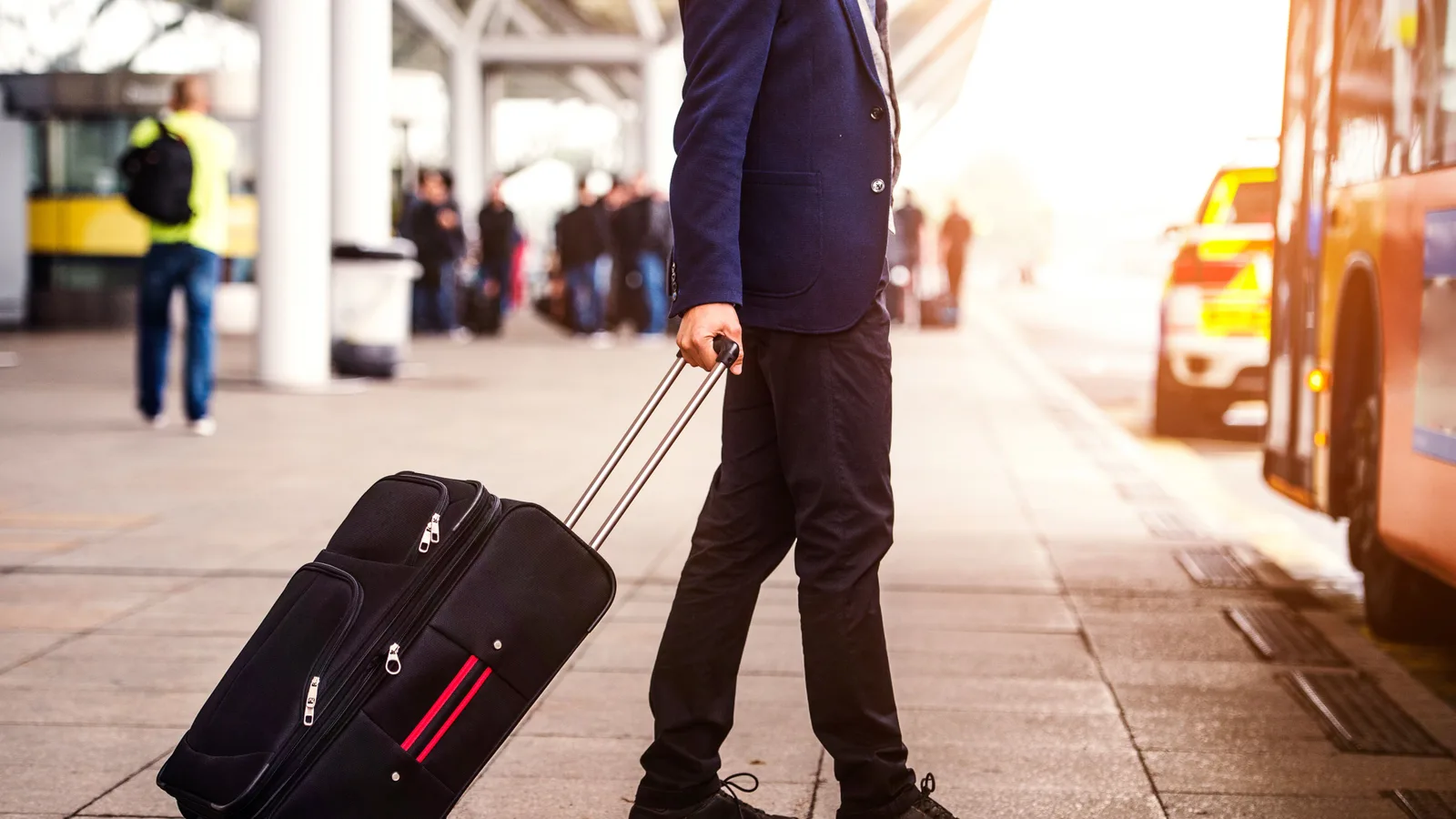
The Best Travel Suitcases: 5 Picks Worth Packing
Our shortlist of the best travel suitcases for US trips: carry-ons and a checked bag, compared on wheels, durability, warranty and price.
The short answer: which suitcase fits your trip
Almost every traveller is better off with a carry-on than a big checked suitcase: you skip the baggage claim, you cannot lose your bag, and you pack less junk. The catch is that carry-on rules are strict, so the bag has to be well built and genuinely the right size.
Our quick answer, by traveller:
- One bag for nearly every trip: the Travelpro Platinum Elite 21-inch Expandable Spinner. Softside, expandable, rolls straight, and covered by a limited lifetime warranty.
- You fly constantly and want a bag that gets repaired, not replaced: the Briggs & Riley Baseline Essential 22-inch Carry-On.
- You want a hard shell with a built-in charger: Away The Bigger Carry-On.
- You want a hard shell without spending much: the Samsonite Freeform 21-inch Hardside Spinner.
- You need to check a bag for a week or more: the Monos Check-In Medium.
The 5 best travel suitcases
Best overall carry-on
Travelpro Platinum Elite 21-Inch Expandable Spinner
4.8This is the bag most frequent flyers end up with, and for good reason: it is a softside spinner that behaves well in real airports. The MagnaTrac wheels are designed to self-align and track straight, so the bag follows you instead of fighting you, and the extension handle locks at several heights so it works for tall and short travellers alike.
A zip expansion panel buys you an extra day or two of packing on the way home, and inside there is a suiter section for a jacket plus tie-down straps to keep everything flat. It fits the overhead on mainline US aircraft without a fight.
Why we like it
- Self-aligning spinner wheels roll straight and quietly over terminal carpet
- Zip expansion adds useful space without changing the bag's footprint
- Suiter section and interior pockets keep business clothes and cables organised
- Limited lifetime warranty on manufacturing defects
What to know
- Softside nylon shows scuffs, stains and gate-check dirt faster than polycarbonate
- No built-in TSA lock, so you need a padlock for the zippers
Best for frequent flyers
Briggs & Riley Baseline Essential 22-Inch Carry-On
4.7The Baseline costs more than most people expect to spend on a carry-on, and it is aimed at travellers who fly often enough to wear a bag out. The CX system lets you pack the bag full, close it, and then compress everything down — or expand it for the return trip.
It runs on two recessed wheels rather than four, which sounds old-fashioned until you drag it over a curb or a cobbled street. The real selling point is the lifetime warranty, which covers airline damage as well as manufacturing faults.
Why we like it
- Compression system squeezes several days of clothes into carry-on dimensions
- Lifetime warranty covers airline damage, not just defects
- Two recessed wheels survive curbs, stairs and rough pavement
- Outer handle and flat interior make it easy to carry a second bag
What to know
- The most expensive pick here by a wide margin
- Two wheels mean you tilt and pull it rather than roll it alongside you
- Heavier than most hardside carry-ons before you pack anything
Best hardside for tech travel
Away The Bigger Carry-On
4.5Away made the hard-shell carry-on mainstream, and The Bigger Carry-On is the size most people want: roomy enough for a long weekend but still built to clear the overhead on mainline US flights.
The polycarbonate shell deals with rain and baggage-handler enthusiasm far better than fabric, and the removable battery lets you top up a phone at the gate. Inside there is a compression pad that acts like a built-in packing cube and a laundry bag for the dirty stuff.
Why we like it
- Polycarbonate shell shrugs off rain, spills and knocks
- Removable battery charges a phone without hunting for an outlet
- Interior compression pad and laundry bag keep packing tidy
- Built-in TSA combination lock
What to know
- No expansion, so a full bag stays full
- Battery rules vary by airline — you may be asked to remove it
- Light-coloured shells show scratches and scuffs
Best budget hardside
Samsonite Freeform 21-Inch Hardside Spinner
4.2If you fly a few times a year and cannot justify a premium bag, the Freeform is the sensible answer. You get the same basic package as the expensive hardsides — a moulded shell, four dual spinner wheels, a built-in TSA combination lock and zip expansion on the carry-on models — for a fraction of the outlay.
What you give up is refinement. The interior is one zipped divider and elastic straps, the handle has more wobble, and the shell marks more easily. For occasional trips, none of that matters much.
Why we like it
- Costs far less than the premium picks while covering the basics
- Four dual spinner wheels roll easily in any direction
- Built-in TSA combination lock
- Expandable on the carry-on models
What to know
- Basic interior: one zipped pocket and elastic straps
- Handle and wheels feel less solid than premium brands
- Shell scratches show, especially on darker colours
Best checked suitcase
Monos Check-In Medium
4.6When a carry-on genuinely will not do — a week of winter clothes, a family trip, a work conference with samples — this is the checked bag to buy. It is a polycarbonate hardside with four spinner wheels, a TSA combination lock and a compression pad that stops everything sliding to the bottom.
Monos also includes two shoe bags, which is a small thing that keeps clean clothes clean. It comes with a lifetime warranty and a trial period, so you can pack it and change your mind if the size is wrong.
Why we like it
- Polycarbonate shell with a finish that hides scuffs better than gloss
- Four spinner wheels handle airport floors, kerbs and taxi ranks
- Compression pad plus two shoe bags included
- Lifetime warranty and a 100-day trial
What to know
- No expansion, so overpacking is unforgiving
- Check-in size only — far too big for the overhead
- Heavier than a fabric checked bag of the same capacity
How the carry-on picks compare side by side
| Feature | Travelpro Platinum Elite | Briggs & Riley Baseline | Away Bigger Carry-On | Samsonite Freeform |
|---|---|---|---|---|
| Type | Softside spinner, expandable | Softside two-wheel, expandable | Hardside spinner | Hardside spinner, expandable on carry-on models |
| Best for | One bag for almost every trip | Frequent flyers who want repairs, not replacements | Charging on the go and tidy packing | Travellers on a tight budget |
| Wheels | Four self-aligning spinners | Two recessed wheels | Four 360-degree spinners | Four dual spinners |
| Built-in lock | No | No, but lockable zippers | Yes, TSA combination | Yes, TSA combination |
| Expansion or compression | Zip expansion panel | CX compression and expansion system | Interior compression pad | Zip expansion on carry-on models |
| Warranty | Limited lifetime | Lifetime, including airline damage | Limited lifetime | Limited cover, shorter than premium brands |
| Watch out for | Fabric stains and no lock | Price, plus two-wheel handling | No expansion and airline battery rules | Basic interior and lighter hardware |
Carry-on or checked: match the bag to the trip
A carry-on is the right default for trips of up to about a week, especially in the US where checked bag fees add up fast and luggage delivery is not guaranteed. The trade-off is laundry and layering: pack a capsule wardrobe and plan to wash.
A checked bag makes sense when:
- You are travelling for more than a week, or for a climate that needs bulky layers.
- You are carrying gear — ski kit, camera bodies, work samples — that will not squeeze into 22 inches.
- You are travelling with children and would rather check one big bag than manage four small ones.
- You are on a long-haul trip with a connection, where one checked bag is less to drag through a terminal.
Most households end up with both: a good carry-on for short trips and a medium check-in for everything else.
How to choose a travel suitcase
Start with the airline limit. For most US domestic flights that is roughly 22 x 14 x 9 inches for a carry-on, measured with wheels and handles included. International and regional carriers can be stricter, so a 21-inch bag is the safer buy if you fly a mix of airlines.
Decide softside or hardside. Fabric bags flex into tight overheads, have exterior pockets for a book or a jacket, and take knocks without cracking. Hardsides protect fragile items, shrug off rain and are easier to wipe clean, but they give you nothing extra when the overhead is full.
Look at the wheels and handle first. They are the parts that fail. Four spinner wheels are easiest on smooth terminal floors; two larger recessed wheels cope better with cobbles, gravel and snow. Test the handle for wobble — a rattling handle means a long week of dragging.
Weigh the empty bag. Everything the bag weighs is weight you cannot pack. A lighter shell leaves more room under airline weight limits, which matters on international flights.
Read the warranty. Budget bags typically have short cover; premium brands often repair rather than replace, which is worth paying for if you fly often.
- Fits real airline sizers
- 5.0/5
Exterior dimensions with wheels must clear 22 x 14 x 9 inches on most US carriers.
- Wheel and handle quality
- 5.0/5
The first parts to fail; sealed wheels and a solid handle matter more than the shell.
- Shell or fabric durability
- 4.0/5
Hardside resists rain and impact; softside absorbs knocks and stains more.
- Empty weight
- 4.0/5
Lighter leaves more allowance under airline weight limits.
- Warranty and repairability
- 3.5/5
Lifetime cover that repairs airline damage is worth the premium for frequent flyers.
The verdict: buy the Travelpro first
Frequently asked questions about travel suitcases
Do I need a four-wheel spinner instead of a two-wheel bag?
Spinners are easier on smooth terminal floors because you walk beside the bag instead of dragging it. Two-wheel bags win on cobblestones, gravel and snow, where large recessed wheels roll better and the tilted stance keeps the shell off the ground.
Will a 22-inch carry-on fit in the overhead on every US airline?
No. Most mainline US carriers allow about 22 x 14 x 9 inches, but regional jets have much smaller bins and some basic-fare gates use a sizer. A 21-inch bag is the safer choice if your itinerary includes small aircraft.
Can I leave a power bank in my suitcase?
Not in a checked bag. Spare lithium batteries and power banks must travel in the cabin with you, and a built-in carry-on battery needs to be removable in case the airline asks you to take it out.
How heavy should an empty carry-on be?
Lighter is better, since the bag's own weight counts against airline limits and against your shoulders on stairs. Hardside shells are often lighter than framed fabric bags of the same size.
Is an expensive suitcase worth it if I only travel occasionally?
Usually not. The price jump buys better wheels, a stronger handle and a warranty that repairs rather than replaces. If you fly a handful of times a year, a mid-range hardside covers the job; the premium picks pay off for people who fly monthly.
Related articles
 The Best Carry-On Luggage: 5 Picks for Every TripShortlists
 Best City to Travel in Canada: 5 Picks for Every TravelerShortlists
 Best Crossbody Bags for Travel: 5 Picks Worth PackingShortlists
 The 5 Best December Travel DestinationsShortlists
 The 5 Best Places to Go in JanuaryShortlists
 Best Destinations to Visit in March: 5 Trips Worth PlanningShortlists
 Best Hiking Boots: 5 Picks for Trails, Backpacking and Wide FeetShortlists
 Best Island to Travel to in Hawaii: 5 Picks ComparedShortlists