How to Pack Toiletries for a Flight: Carry-On Guide
Pack toiletries for a flight with the 3-1-1 rule: choose 3.4 oz containers, use one clear quart bag, prevent leaks, and keep essentials in your carry-on.
The short answer: 3-1-1 for carry-on
For a flight departing the United States, the carry-on rule is simple: each liquid, gel, aerosol, cream or paste must be in a container of 3.4 fluid ounces (100 milliliters) or less. Put those containers in one clear, quart-sized resealable bag, and bring one bag per passenger. At the security checkpoint, take the bag out of your carry-on and place it in a bin. Anything larger belongs in checked luggage, subject to your airline's rules. The limit applies to the size of the container, not how much is left inside it.
- Carry-on container limit
- 3.4 fl oz (100 ml) or less per container
- Security bag
- One clear, quart-sized resealable bag
- Bag allowance
- One bag per passenger
- Where the bag goes
- Carry-on, packed where you can remove it quickly
- Larger containers
- Checked bag only, subject to airline rules
- Medically necessary liquids
- May exceed the limit; tell the security officer
Before you start: what to check and gather
A few minutes of prep prevents most checkpoint problems. Do this before you start filling bottles.
- Check the rules for every airport on your route, not just the departure airport. The US 3-1-1 rule is a good baseline, but some countries and airports have different bag sizes or screening procedures.
- Decide whether you are traveling carry-on only. If you are checking a bag, you can take larger containers, but you also take on more leak risk and the chance that the bag is delayed.
- Read your airline's baggage rules for liquids, aerosols and medications. Airline rules can be stricter than security rules.
- Set out every toiletry you plan to use and split it into two piles: liquids and solids.
- Gather a clear quart-sized resealable bag, small refillable containers, a leakproof toiletry bag and labels. A small funnel helps with decanting.
- Check the weather and trip length. Sunscreen, insect repellent and heavy hair products take up more space than most people expect.
Step-by-step: pack toiletries for a flight
-
1. Sort every item into liquid or solid
Put shampoo, conditioner, body wash, lotion, sunscreen, toothpaste, gel deodorant, shaving cream, hair gel, perfume, lip gloss, mascara and similar spreadable or sprayable products in the liquid pile. Put bar soap, solid deodorant, bar shampoo, powder, a comb and other dry items in the solid pile. If you can squeeze it, pump it, spray it or spread it, treat it as a liquid.
-
2. Cut the kit down to what you will use
For a short trip, decant only what you need or switch to solid versions. A week-long trip does not require a full bottle of shampoo. Leave the just-in-case products at home; they are the main reason a quart bag will not close.
-
3. Fill containers to about three-quarters full
Use containers labeled 3.4 fl oz (100 ml) or less. Leave an air gap at the top so the liquid has room to expand with pressure and temperature changes. Close the cap firmly, then label the container so you can tell shampoo from body wash.
-
4. Pack the clear security bag upright
Stand the containers in the clear quart bag with the caps up. Squeeze excess air out of soft tubes, close the bag and check that it seals without bulging. Do not force the zipper; if it will not close, remove an item.
-
5. Add a second layer of leak protection
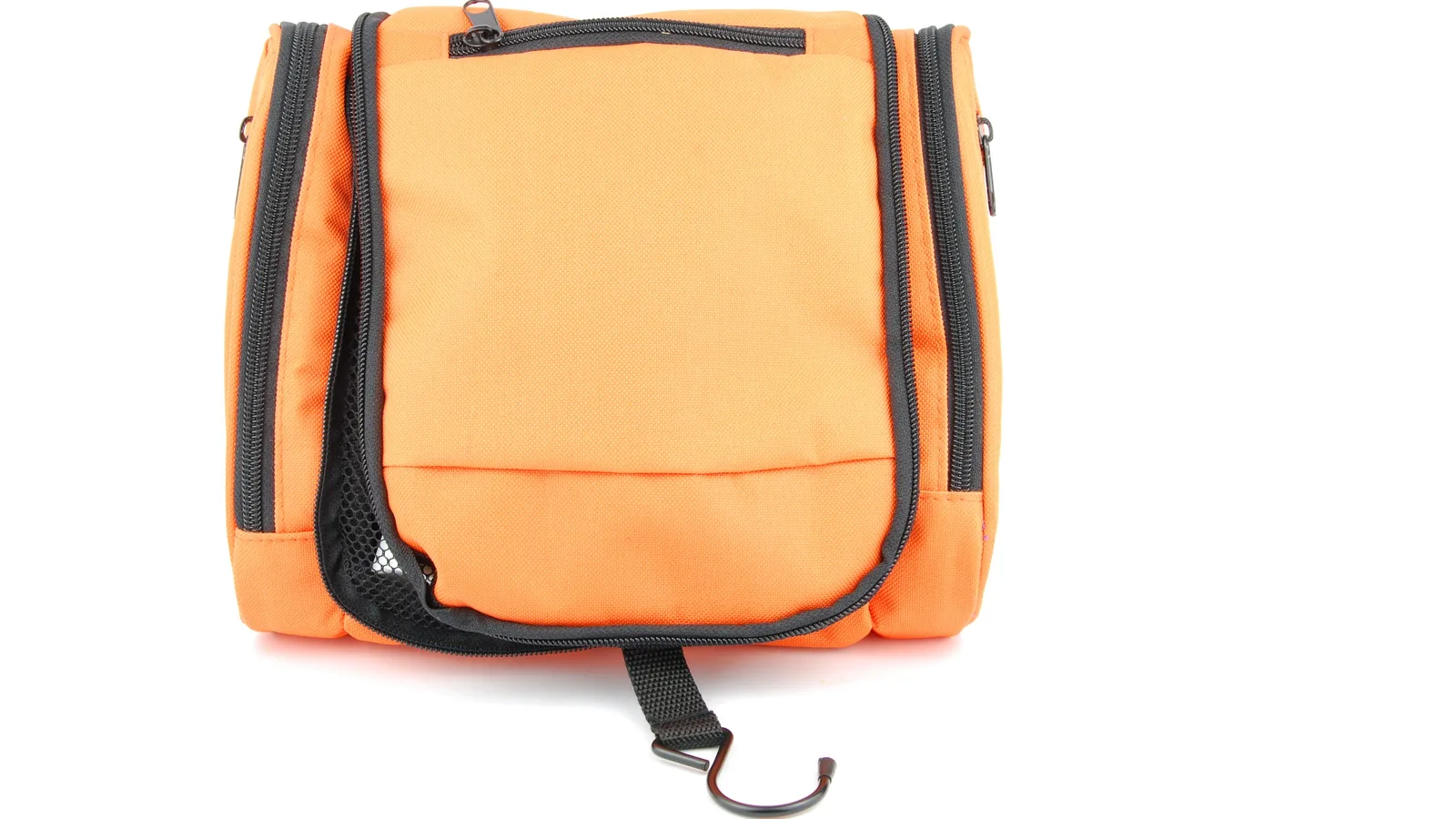
Place the clear bag inside a leakproof toiletry bag or a larger zip-top bag. This does not replace the quart bag at security, but it protects your clothes if a cap works loose in the cabin. Keep bottles away from your laptop and other electronics.
-
6. Pack dry items separately
Put toothbrush, comb, razor, solid deodorant and makeup in a separate compartment or pouch. Keep the clear liquid bag easy to grab. If you use a hanging toiletry bag, put the liquid bag in the outside pocket so you do not have to unpack the whole thing at the hotel.
-
7. Place the kit at the top of your carry-on
Put the toiletry kit in an exterior pocket or on top of your packed clothes. You want to pull it out at security without unloading the bag. If you are using a backpack, avoid burying it under shoes or a jacket.
-
8. At the checkpoint, remove the bag
Take the clear quart bag out of your carry-on and place it in a security bin, unless an officer gives you different instructions. Keep medications and medically necessary liquids separate and tell the officer before screening. Do not open containers at the checkpoint unless you are asked to.
-
9. Pack checked toiletries for the trip home
If you check a bag, you can take larger containers, but seal each one in a zip-top bag, stand bottles upright and cushion them between clothes. Put essential medications, contact lenses and anything you cannot replace in your carry-on, not the checked bag.
What counts as a liquid, and what can go in checked luggage
Security officers do not just look for bottles of water. The US Transportation Security Administration treats liquids, gels, aerosols, creams and pastes as liquids for the 3-1-1 rule. That includes toothpaste, lotion, sunscreen, liquid foundation, mascara, lip gloss, hair gel, shaving cream, perfume and aerosol deodorant. Solid stick deodorant, bar soap, loose powder and a dry toothbrush do not count.
The bag is for your carry-on. In a checked bag, you can pack larger bottles, but the airline may still limit quantity or prohibit certain items. Checked bags also face pressure changes and rough handling, so a bottle that survives the outbound flight can still leak on the return trip.
| Packing question | Carry-on | Checked bag |
|---|---|---|
| Container size | 3.4 fl oz (100 ml) or less | Larger sizes allowed, subject to airline rules |
| Bag requirement | One clear quart-sized resealable bag | No quart bag required, but seal each container |
| Security | Remove the bag at the checkpoint | Stays in the checked bag |
| Leak risk | Pressure changes can push liquid out | Handling and altitude changes can crack or open bottles |
| Best for | Short trips and carry-on-only travel | Long trips, large products and family supplies |
Common mistakes and how to fix them
- Packing a full-size bottle with a little left. The container is still over the limit. Fix: transfer the product to a smaller bottle or check the bag.
- Filling bottles to the brim. Pressure changes can force liquid out around the cap. Fix: leave about a quarter of the bottle empty and close the cap tightly.
- Using a bag that is too small. A sandwich bag is not a quart bag, and an overstuffed quart bag may not seal. Fix: use one clear quart-sized bag and remove nonessentials.
- Burying the bag in the carry-on. You will have to unpack at security. Fix: put it in an exterior pocket or on top.
- Forgetting that creams and pastes count. Toothpaste, sunscreen and foundation are liquids for screening. Fix: sort by texture, not by what the label calls the product.
- Packing aerosols in the cabin. Most full-size cans exceed the limit and some are flammable. Fix: check the size and airline rules, or plan to buy the product at your destination.
- Putting essential medication in a checked bag. A delayed bag can separate you from medication. Fix: keep medication in your carry-on in its labeled container.
Safety and rules that are easy to get wrong
- Medically necessary liquids. Prescription medicine, contact lens solution and similar items may be allowed in larger amounts, but you must tell the security officer. Keep them in original labeled packaging and pack them in carry-on.
- One bag per passenger. The quart bag allowance is per person, not per family. If you are traveling with children, each passenger gets a bag, but the contents still have to fit the rules.
- International departures. The 3-1-1 rule is a US rule. Other countries may use 100 ml containers but require a different bag size or screening method. Check the airport you are departing from, not just your destination.
- Flammable aerosols and alcohol. Some hairsprays, dry shampoos and sanitizers are flammable or alcohol-based. Check the airline's dangerous goods rules and never puncture or heat a pressurized can.
- Razors and sharp items. Disposable razors are generally allowed in carry-on, but straight razors and loose blades may not be. Check the current rules if you are unsure.
- Hand sanitizer. It is a liquid. Keep it within the carry-on limit unless the airport's current rules say otherwise, and pack it in the quart bag.
A sample carry-on kit that fits the quart bag
The exact contents depend on your trip, but a simple kit for a week of carry-on travel looks like this:
- Toothbrush and a travel-size toothpaste (3.4 oz or less)
- Solid deodorant or a travel-size gel deodorant
- Bar soap or a small body wash; bar shampoo and conditioner if you prefer solids
- Travel-size sunscreen and lip balm with SPF
- Small shampoo, conditioner and lotion only if you are not relying on hotel supplies
- Razor, comb, hair ties and a small amount of styling product
- Essential medication in a labeled container, plus contact lens solution if it is medically necessary
Lay the containers flat in the clear bag, then put the bag in the toiletry case. If the bag will not close easily, you have packed too much. A good test is to close the bag, hold it by the zipper and give it a gentle shake. Nothing should slide out or press hard against the seal.
Frequently asked questions
Does the 3-1-1 rule apply to checked bags?
No. The 3-1-1 rule is for carry-on bags. Checked bags can usually hold larger containers, but airline rules, dangerous goods limits and international customs rules still apply.
Can I bring a 3.4 oz container that is only half full?
Yes. The limit is the container's capacity, not the amount inside. A 3.4 oz (100 ml) bottle is allowed even if it is partly empty; a larger bottle is not allowed in carry-on just because it is nearly empty.
Do solid toiletries need to go in the clear bag?
Usually no. Bar soap, solid deodorant, powder and a dry toothbrush are not liquids. If a product is a gel, cream, paste or aerosol, put it in the quart bag.
Can I bring perfume in my carry-on?
Yes, if the bottle is 3.4 oz (100 ml) or less and fits in your clear quart bag. Larger bottles should go in checked luggage, subject to airline rules.
What should I do with prescription liquids?
Keep them in their original labeled packaging in your carry-on and tell the security officer before screening. Medically necessary liquids may be allowed above the 3.4 oz limit, but they are screened separately.
Is toothpaste considered a liquid?
Yes. Toothpaste is a paste and counts toward the 3-1-1 limit. A travel-size tube of 3.4 oz or less can go in the clear bag.
Related articles
 How to Avoid Jet Lag: A Step-by-Step PlanTrip Guides
 How to Choose a Travel Backpack That Actually FitsTrip Guides
 How to Choose Travel Insurance: A Step-by-Step GuideTrip Guides
 How to Find Cheap Flights: A Step-by-Step GuideTrip Guides
 How to Fold a Suit for Travel So It Arrives Flat and SharpTrip Guides
 How to Pack a Carry-On for a Week: Step-by-StepTrip Guides
 How to Pack for a Ski Trip Without OverpackingTrip Guides
 How to Pack Light for a Trip: A Step-by-Step GuideTrip Guides