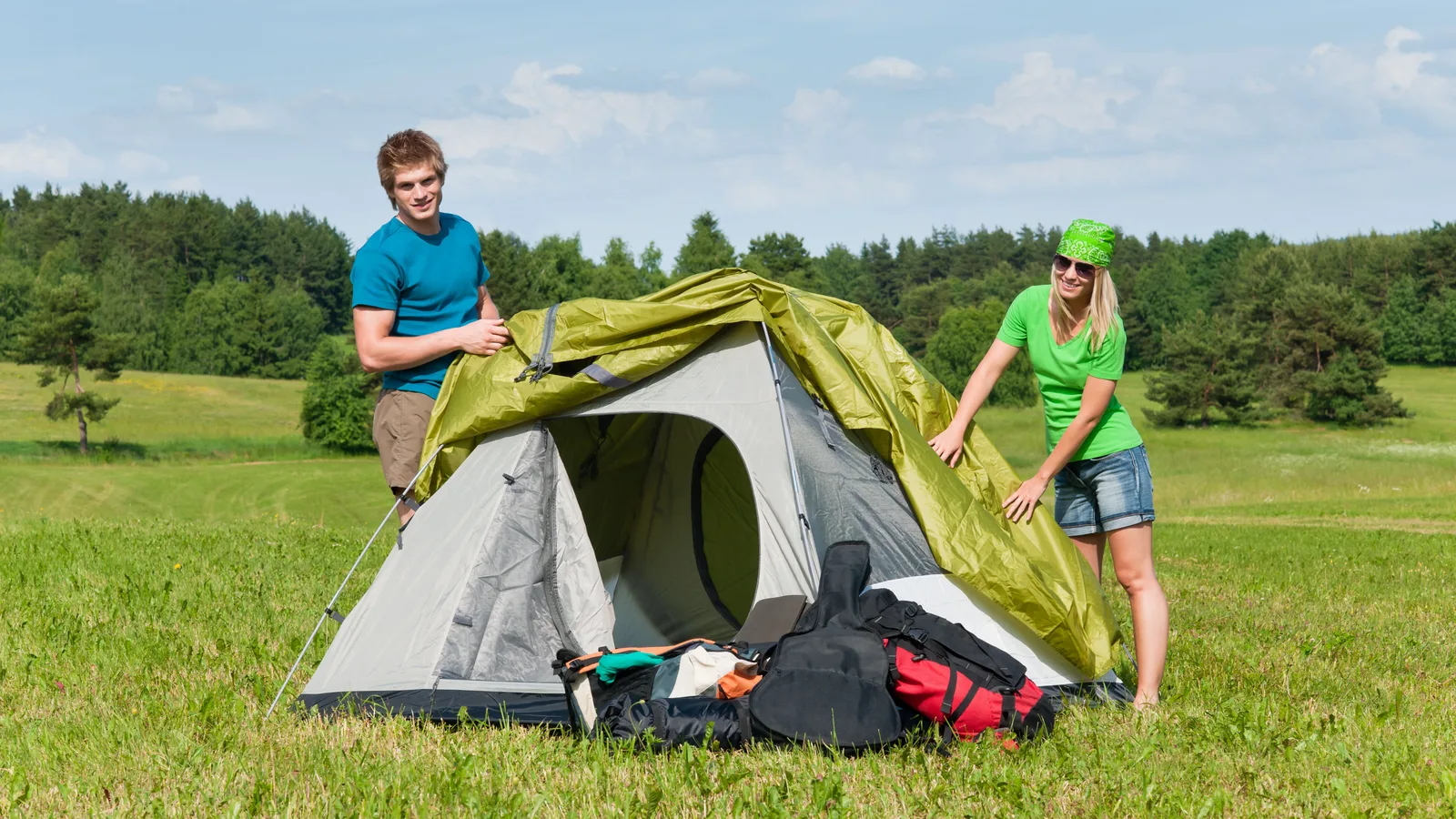
How to Plan a Camping Trip, Step by Step
A practical walkthrough of planning a camping trip: choosing dates and a site, booking, packing a gear list that works, meals, and the safety checks.
The short answer
Planning a camping trip is mostly about order. Decide when, where, who with, and how you'll sleep and eat — then book, pack to a written list, and tell someone where you'll be. First trips rarely go wrong in the woods; they go wrong at the front end, with a site that doesn't suit the group or a booking made without reading the rules.
The job fits into four moves:
- Settle the basics: dates, group size, budget, and how far you're willing to drive.
- Choose and reserve a site that matches the group and the vehicle.
- Plan sleep, food, and water before you buy or borrow a single item.
- Pack, check the forecast, and leave an itinerary with someone at home.
Decisions to settle before you look at campsites
Write these answers down before you start browsing. A short list of hard constraints turns an overwhelming map of options into three or four real candidates.
- Trip length
- One night is a test run, two nights is a trip, three or more needs a slow morning or a rest day built in.
- Group size and ages
- Count adults, children, and anyone who won't carry weight. This sets site size, the number of tents, and how many vehicles you'll bring.
- Maximum drive time
- Pick a ceiling for each direction. Three hours each way is a common limit for a weekend.
- Vehicle
- Decides whether you can reach rough dirt-road sites and how much gear, water, and food you can bring.
- Experience level
- On a first trip, choose a drive-in campground with drinking water, toilets, and a store nearby.
- Budget ceiling
- Include site fees, fuel, food, and anything you still need to borrow or replace before you go.
Match the campsite type to the group
Most campgrounds fall into one of three categories. The category matters more than the specific park, because it dictates your gear, your water plan, and how far ahead you need to book.
| Feature | Drive-in campground | Walk-in site | Backcountry site |
|---|---|---|---|
| Access | Park at or beside your pitch. Tents, coolers, and chairs come straight out of the trunk. | A short walk from a parking area, typically a few minutes up to a mile. | Hike or paddle in. Everything you need for the night is on your back. |
| Facilities | Usually flush toilets, drinking water, picnic tables, and fire rings. | Varies widely: often a vault toilet and a water tap, sometimes neither. | None. You carry water in, treat or filter it, and pack out all waste. |
| Booking | Reservation systems, sometimes with a booking fee and a cancellation window. | Mixed. Some sites are reservable, many are first-come, first-served. | Permits or quotas in many areas, and they can sell out well ahead. |
| Gear volume | Large tents, air mattresses, and a full camp kitchen all make sense. | Keep it to what you can move in two trips from the car. | Every item counts. Assume no spares and no extras. |
| Best for | First trips, families, and anyone who wants a table and a fire ring. | People who want quiet without committing to a long hike. | Experienced campers who value solitude over comfort. |
The planning sequence, step by step
-
1. Lock the dates and a backup weekend
Choose the weekend and a fallback date. Weather, work schedules, and campsite availability all interfere, and a second date stops one cancellation from killing the whole trip.
-
2. Shortlist three campgrounds
Filter by drive time, facilities, and whether fires are allowed. Read recent reviews for noise, drainage, and road conditions — a site that turns to mud in rain is worth knowing about before you arrive.
-
3. Check opening dates, permits, and fire restrictions
Some campgrounds close seasonally, and some areas need a permit separate from the campsite fee. Fire restrictions change week to week in dry regions, so check the land agency's own page rather than a blog post.
-
4. Book the site and save the confirmation offline
Note check-in and check-out times, the maximum number of people and vehicles per site, quiet hours, and the cancellation policy. Download the confirmation — cell service at the gate is often poor.
-
5. Check the forecast and the sunset time
Look at the forecast for the area and elevation you're camping at, not your hometown. Sunset time tells you when to arrive so the tent goes up in daylight.
-
6. Write the gear list in categories
Sleep, shelter, kitchen, clothing, lighting, repair, hygiene, first aid, documents. Lay everything out and pack it once at home — that is when you discover the missing tent pole, not at the site.
-
7. Plan meals and water day by day
Count breakfasts, lunches, dinners, and snacks, then add one spare meal. Decide how much water you carry in and whether you can refill on site.
-
8. Leave an itinerary and do a final check
Send someone the campground name, site number, arrival and departure dates, and a time to check in. Before pulling out, confirm the stove fuel is secure, the cooler is closed, and the reservation is saved.
Read the fine print before you pay
Most campground friction comes from rules nobody read. Before you confirm, find the answers to these:
- Is there a fire ban in force, and does it cover contained stoves?
- What are the quiet hours, and are generators allowed at all?
- Are pets permitted, and must they stay leashed?
- Is there a food storage rule, such as a bear locker requirement?
- How many people and vehicles does one site allow before you pay for a second?
- Is there a length limit for vehicles or trailers on the road in?
Build the gear list in layers, not in one pile
Pack by system rather than by pile. Each system should be complete and checkable on its own, which makes it obvious what is missing.
- Shelter: tent with every pole, stake, and guy line, a groundsheet, and a repair patch.
- Sleep: a bag rated for the overnight low, an insulated pad, and a pillow or a stuff sack of spare clothes.
- Kitchen: stove and fuel, lighter and matches in a dry bag, pot, utensils, plates, dish soap, and trash bags.
- Clothing: layers, a warm hat, a rain shell, spare socks, and shoes that can get wet.
- Light and power: a headlamp per person, spare batteries, and a power bank.
- Repair and safety: duct tape, cord, a multitool, a first aid kit, and personal medications.
- Documents: reservation, permits, ID, and a paper map if the area has no signal.
Plan the food before you shop
Meals are where first-time campers overpack and under-plan. Write the menu by day, then build the shopping list from it.
- Favor one-pot meals and things that need only boiling water.
- Pre-chop and pre-mix at home; label bags with the meal and the day.
- Freeze what you can and use it as cooler ice on the first night.
- Keep the cooler shut, drain the meltwater daily, and store it out of the sun.
- Add one extra meal that needs no cooking, for the night you arrive late and tired.
On water: drive-in campgrounds usually have a potable tap, so you can refill. If there is no reliable water on site, a widely used rough figure is about a gallon per person per day for drinking and cooking, and more in heat, at altitude, or with heavy exertion. Treat or filter any water taken from a stream or lake.
What commonly goes wrong, and how to fix it
Nearly every camping problem has a predictable cause. Knowing the pattern in advance is most of the fix.
| Problem | Why it happens | What to do |
|---|---|---|
| You arrive after dark | A late start, traffic, or a longer drive than the map suggested. | Pitch the tent first by headlamp, then everything else. Eat something cold rather than cooking in the dark. |
| The pitch floods or puddles | Low ground, poor drainage, or a forecast that changed after booking. | Move to slightly higher ground. Never camp in a dry wash, gully, or riverbed, and keep gear in bins off the ground. |
| It is much colder than expected | Temperature falls faster than forecast, especially in valleys and near water. | Add a warm layer and a hat, insulate yourself from the ground, and eat something. Change out of damp clothes before bed. |
| Animals visit the site | Crumbs in the tent, scented items in a pack, food left on the table overnight. | Store all food and scented items in a vehicle or locker, seal trash, and keep the cooking area separate from the tent. |
| Something essential is missing | Kit was borrowed, split between two cars, or never checked as a full set. | Do a layout check at home and give one person responsibility for each system. |
| The campground is full | No reservation, or a first-come site taken by midday on a Friday. | Have a second campground and a fallback plan, and arrive early in the day for first-come sites. |
Weather, safety, and the plan you leave behind
Weather is the variable you can't control, so plan for the two versions most likely to catch you out.
- Wet and cool is more dangerous than genuinely cold, because people underestimate it. Being soaked at 50°F drains heat fast. Keep a dry layer sealed in a bag and change before you start shivering.
- Heat means shade, water, and less midday effort. Plan the walk for the morning.
- Lightning means moving to a vehicle or a solid building, away from ridges, isolated trees, and open water. Wait at least 30 minutes after the last thunder before going back out.
- Wind flattens poorly pitched tents. Guy out the tent even when the sky is clear.
Keep a first aid kit and your own medications in one grab bag, and know where the nearest ranger station is. Most trips end without incident, but the ones that don't are usually the ones where nobody at home knew where to start looking.
Common questions about planning a camping trip
Do I need a reservation to camp?
Not always, but the answer depends on the individual campground. Many public campgrounds take reservations for most sites and keep a share for same-day arrivals, while others are entirely first-come, first-served. Check that specific campground's page rather than the park's general site.
What is the minimum gear for a first camping trip?
Shelter, a sleep system with insulation underneath you, warmth layers, water, food with a way to prepare or eat it, a light per person, a first aid kit, and a way to keep food away from animals. Everything beyond that is comfort rather than necessity.
Can I camp anywhere on public land?
No. Rules differ by agency and by area. Dispersed camping is allowed in some national forests and other public lands with restrictions, and is often prohibited in parks, near water sources, or at trailheads. Check with the agency that manages the land before you count on it.
Is it safe to camp alone?
Many people do it. The precautions are the same as for a group, only more so: leave a detailed itinerary, choose a campground with other campers within sight or sound, keep a charged phone, and avoid remote backcountry routes until you have more experience.
What should I do if a storm arrives?
Move to a vehicle or a sturdy building. Avoid ridges, isolated tall trees, open water, and metal fences. If you're caught in the open, get low with your feet together and stay away from tall objects, then wait at least 30 minutes after the last thunder before resuming.
How do I keep food away from animals at night?
Store everything scented, including food, trash, and toiletries, in a vehicle, a campground food locker, or an approved container where one is required. Keep it sealed, cook away from your tent, and never take snacks inside to eat in your sleeping bag.
Related articles
 How to Avoid Jet Lag: A Step-by-Step PlanTrip Guides
 How to Choose a Travel Backpack That Actually FitsTrip Guides
 How to Choose Travel Insurance: A Step-by-Step GuideTrip Guides
 How to Find Cheap Flights: A Step-by-Step GuideTrip Guides
 How to Fold a Suit for Travel So It Arrives Flat and SharpTrip Guides
 How to Pack a Carry-On for a Week: Step-by-StepTrip Guides
 How to Pack for a Ski Trip Without OverpackingTrip Guides
 How to Pack Light for a Trip: A Step-by-Step GuideTrip Guides